An oil sample is only useful with the machine history behind it
NORDVEST tracks oil, filter, and separator age across service history, then uses it to fill out Oil Sample paperwork.

An oil sample can tell you a lot about a compressor. But only if you can answer a few basic questions when the result comes back: Which machine did it come from? How many hours were on the unit? How long had the oil and filters been in service? Did the form get submitted? Did the bottle actually leave the shop?
Those details are often split between a handwritten label, a lab portal, a service ticket, and somebody’s memory (or a file cabinet). NORDVEST keeps them together on the asset.
One row, two handoffs
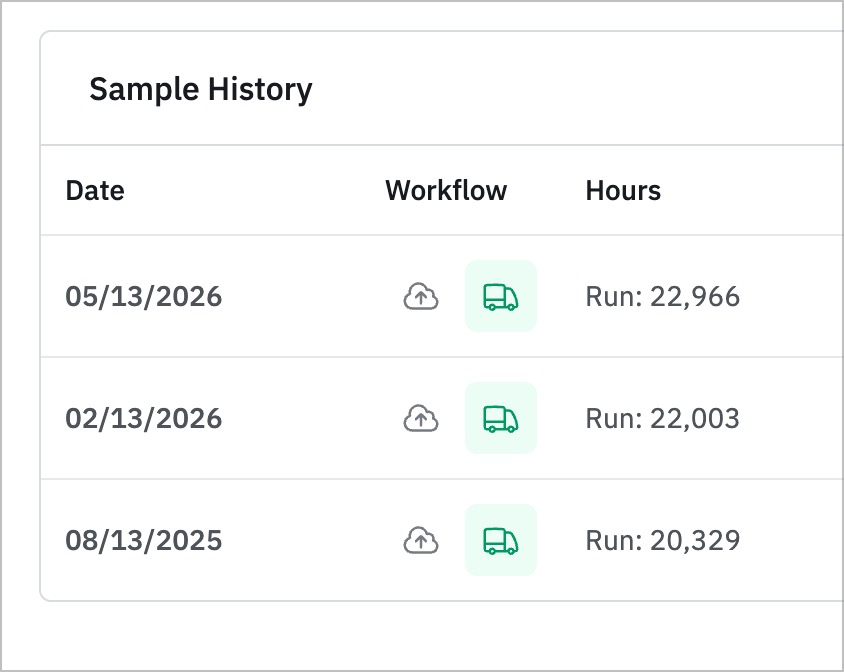
Each entry in Sample History shows the sample date and the run-hour reading recorded when the sample was taken—for example, Run: 22,966.
Hours give the result
A date tells you when the sample was pulled. Run hours tell you how much work the machine did between samples. (And for tracking run to load hours: read more)
When lab results come back, that run to load time context makes the history useful. You can compare changes in oil condition against the machine’s actual use, see whether a reading is moving faster than expected, and catch a developing problem between regular services instead of treating every report as an isolated snapshot.
NORDVEST does not just record that a service happened. It records what was changed, when it was changed, and how many hours were on the machine. When a sample is created, NORDVEST looks backward through those records to calculate how old each consumable was at sampling, in hours and months. Anyone who has filled out a Sullivan-Palatek oil-sample form knows these details matter. WearCheck needs the machine hours, the hours on the oil, filter, and separator, and whether those components were changed when the sample was taken.
That change may be several services back. The oil could have been changed four visits ago. NORDVEST carries the correct date and meter reading forward instead of making somebody dig through old work orders and subtract hour readings by hand.
If the technician pulled the sample and changed the oil or filter during the same visit, the sample is tied to the outgoing component—not the new one installed afterward. That is the oil and filtration condition the lab is actually evaluating.
Follow the build
New field notes, delivered without tracking pixels.
Unsubscribe anytime.