The claim on the machine
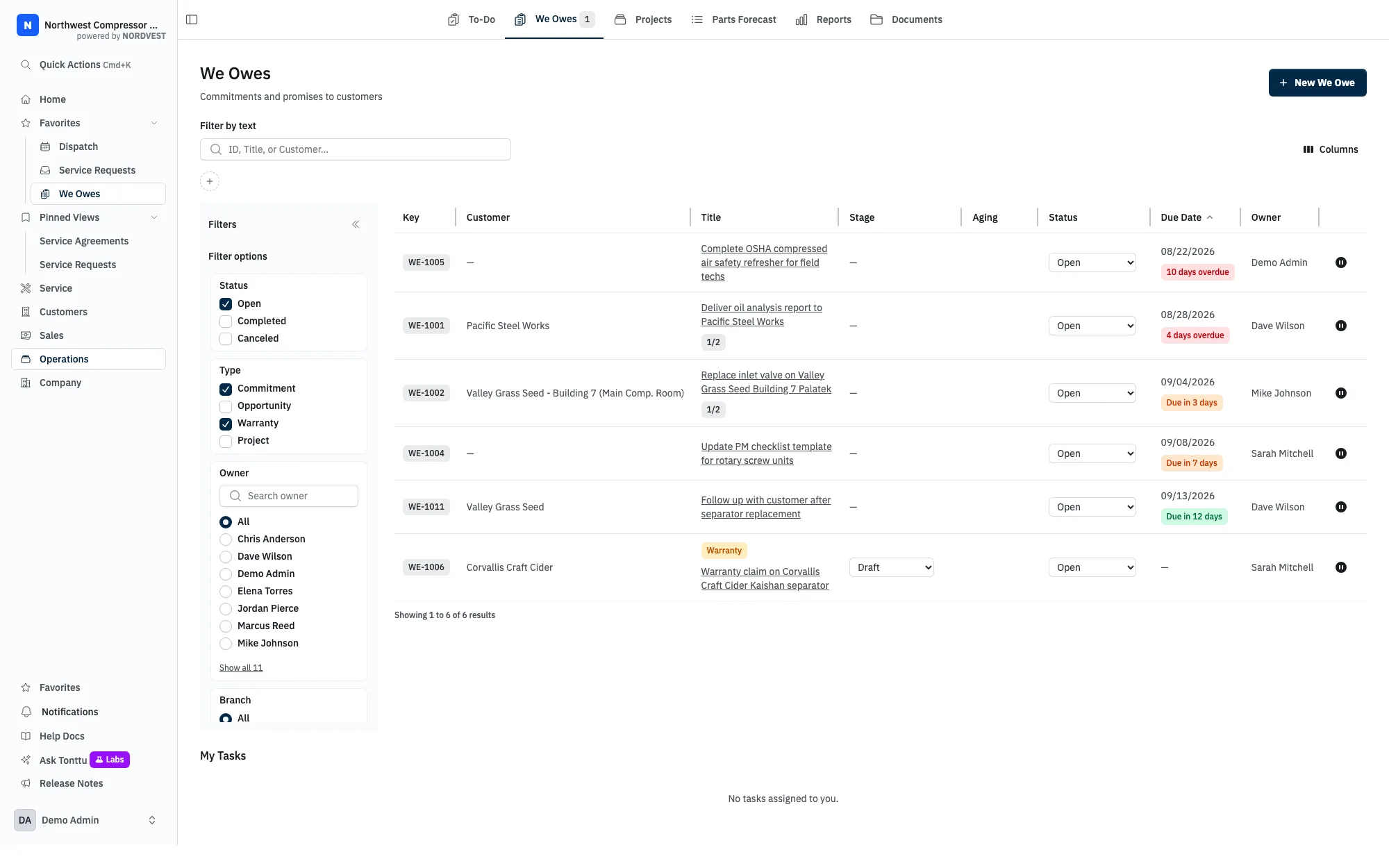
Record a warranty claim as a We Owe. Attach it to the customer and affected machine, with the manufacturer's claim reference.
Submitted, approved, or denied
Track the manufacturer's decision separately from the repair work. A claim starts as Draft, then moves to Submitted, Approved, or Denied.
An approved claim can still have installation work remaining.
The next call to the manufacturer
Assign the claim to a person. Add tasks for missing paperwork, the next call, or the replacement installation.
Defer a waiting claim until its next review date. It returns to the active list on that date.
The completed repair
Link service visits to the claim. Keep the repair record, claim reference, and remaining tasks together.
Mark the We Owe complete when its work is finished. A cancelled claim keeps the reason on record.